Scientific fraud on TV – improvisation program

onderzoeksfraude de vloerop

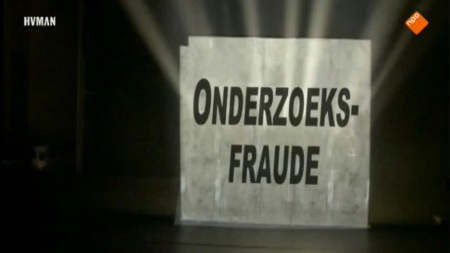
I find the several Dutch examples of scientific fraud and misconduct quite intriguing and  I consider this topic to be one of my ‘projects’. I believe that these examples from the past learn us how the exactly the scientific community works. Different books, documentaries and reports have been published on this topic (such as the books from Frank van Kolfschoten, the  weird apology-in-book-format from Diederik Stapel, the nice documentary on Buck, and the comprehensive reports from the KNAW such as the Schuyt report), and since last friday we can add an episode of the Dutch program “de vloer op” a TV program in which Dutch top actors improvise scenes which are only described in one little sentence.

For this scene, two actors are placed in an empty university dining hall, and the junior scientist is about to confront the senior prof with his suspicion of scientific fraud. The result can be seen here (unfortunately the video cannot be embedded on this wordpress.com website)

PS if you like “de vloer op” please consider to support this great program because the government support for HUMAN is not guaranteed. please visit their special website.

WEON 2014

twitter logo

The WEON is the annual meeting of the VVE, the Dutch Epidemiological Society. The whole conference is held in English though, given that each more and more non Dutch also attend. These might be working here in the Netherlands, but we also have visitors from abroad. Last year, the WEON was organised in Utrecht with a couple of organisation from Utrecht and surroundings. The conference was a great succes with great preconferecence workshops and great plenary speakers, as I wrote before on the causality blog.

But now onto next year, when the WEON will be held in Leiden! Before you start with anything, you need to start with a motto and logo. Since the focusgroup “causality” is also based in Leiden the motto and the logo are off course linked to causal inference! Currently, we are working hard on the basic program. And specifically, I’m working on a special preconference workshop that is targeted at young epidemiologist. I got some ideas, but if you have any suggestions, please join the conversation via @WEON2014!


ERA-EDTA CME course – “interpretation and presentation of study results”

During “conference season” I visited several conferences: ISTH, eurostroke, WEON, NVTH,  UK-CIM and the ERA-EDTA. During all conferences I got the opportunity to present my own research, except for during the ERA-EDTA. For this conference I was asked to teach in a CME course on how to perform and interpret a clinical research project. The program:

– Setting up your study: study questions and study designs
Vianda Stel, Amsterdam, the Netherlands

– Threats to validity of study findings: bias and confounding
Kitty Jager, Amsterdam, the Netherlands

– Prognosis vs aetiology
Friedo Dekker, Leiden, the Netherlands

– Interpretation and presentation of study results
Bob Siegerink, Leiden, the Netherlands

Since this is a conference on kidney diseases, the examples that I use are from that field. Although not necessarily my field, I believe that the talk can be of interest for anybody who is at the start of their research career. Please click the picture below to see the talk (slides + audio)

click here for audio and slides

Bad Pharma Symposium

I just got word that we got funding from an external to buy 400 copies of Bad Pharma to use as instruction material in our redesigned course on academic and scientific education. The book touches upon the role of  the pharmaceutical industry in the design, execution, presentation and dissemination of results of clinical trials. The author, Ben Goldacre, identifies several problems and brings forth several solutions. But are these all correct?

We will use this basic question as the basis for a complete symposium on this topic: are the problems identified by Goldacre the real problems, or just cherry picked examples from the past? And are the solutions that he provides real solution that could work? And can we think of any other way to improve the care of our patients in the future?

I had this idea a long time ago when i first read this book. It touches upon a matter that is discussed in the old version of this course for a couple of years. Even more so: during this course students are asked to grade the quality of trials and the subsequent reference to this publication. The results show that the quality is often low, even in high impact journals, and that the references do not always justify the claims made in medical advertisements. These results have been published in several publications and are even cited in the book.

It was quite a hassle to get a ‘normal’ book into the curriculum of our medical center. Most people liked the idea of reading a book and organising a symposium, but a lot of people told me that it was impossible to do so. A “normal” book could not be placed on the mandatory reading list, and just buying electronic or hard copy  versions is just way to expensive. luckily, with help from the Walaeus Library of the LUMC and prof FMH we were able to obtain external funding. And no, its not funded by ‘big pharma’, but a small fund that subsidises small but nice projects that make the world a bit smarter.

Measuring aerosols with your smartphone

Today I participated in crowdsourced science: Measuring aerosols with my smartphone. Thousands of measurements in one day, all about the air quality in the Netherlands. The nice thing about this project is that laypeople are the researchers: everybody that ordered a free gadget for their iPhone is a researcher on this great sunny day. How the measurements work? See for yourself!

More on this project can be seen on their website ispex.nl. This project was made possible with funds fron the Dutch lung foundation and the Academische Jaarprijs. So is it time to think of a big epi project in which crowd sourced data can be used?

New publication in NTVG: patient crossover studies

Recently another paper became available online. Although accepted couple of months before and not yet in print, the paper on patient crossover studies can now be read and downloaded from the NTVG website. This paper, with first author REJR,  is a continuation on the paper on crossover trials on which I’ve blogged earlier. Together, these articles provide a comprehensive overview of the possibilities to use a study subject as its own control.

Eurostroke 2013

Today, I write from the Eurostroke conference. This conference is a yearly conference for stroke physicians and researchers to share knowledge, both existing and new. I always liked the idea of combining research and education in a conference.

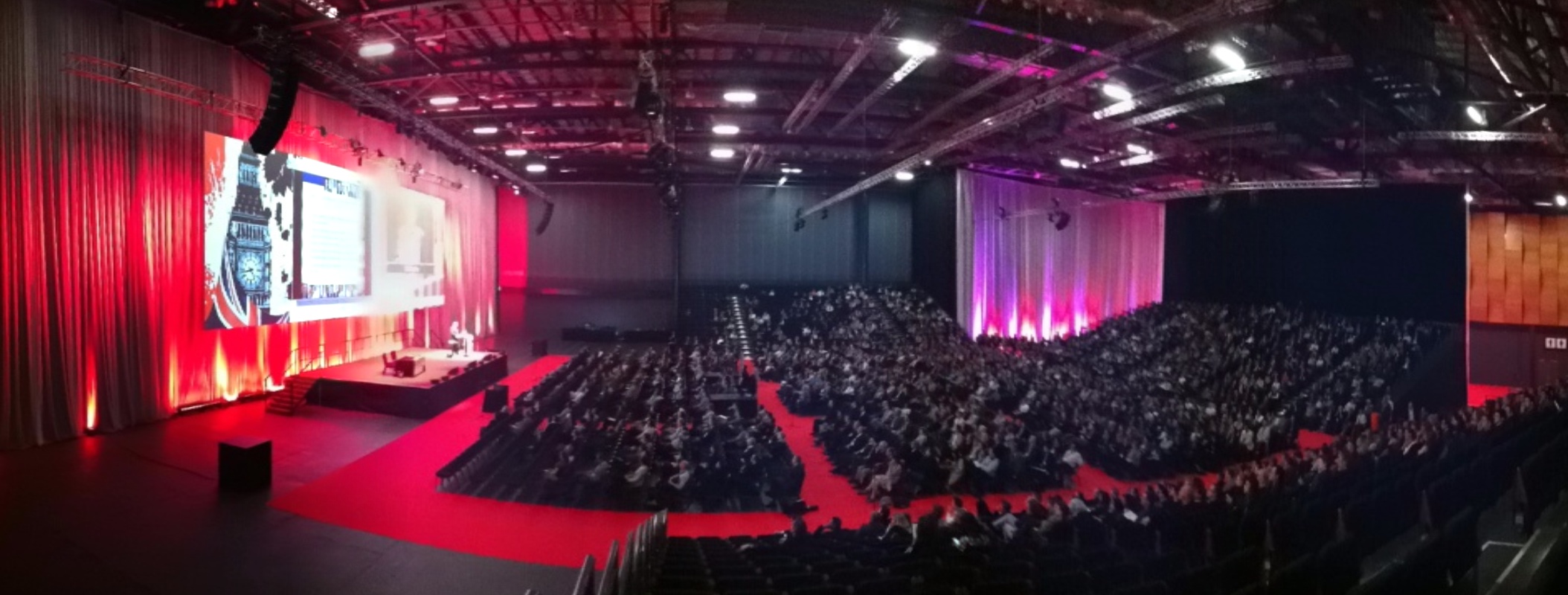
There are about 3500 delegates, as can be seen from the panorama photo I just took during the plenary clinical trials session. Although most of these topics are not directly of interest fr my own research, I enjoyed seeing how these PI share their work, which sometimes is a real impressive feat.
Image ESCI gotta run to my poster session, where I will present the poster below. If I referred you to this site to download the electronic version of the poster, you can click the link below.

 Poster eurostroke 2013 Siegerink et al P255

New course started today: Scientific education

Today, the course scientific education started. This course, a regular 2nd year course in the LUMC curriculum, runs for three weeks and is organised by AvHV and myself. This is the last year this course will be given in this form, and we are working hard to modify the course to make it fit in the new curriculum. This means that this year we have a opportunity to test some of my our ideas. One of these things is a non compulsory journalclub, in which we’re going to read one article with all students at the same time. I’m curious how may students really would like to train their scientific skills, outside of the curriculum.

Also, we are preparing a new full day interactive assignment and sympium, which is centered around the book Bad Pharma of author Ben Goldacre. I hope to fine some students that are wiling to help me in this development of this part of the new course. Exciting stuff!

– edit 30/5 : the course just finished and 320 students took their exam friday 24th. Although i do like students, I hope I won’t have to see them again for that will mean that they failed the course.

Grant awarded to investigate the long term effects of cardiovascular disease at a young age

Today I got a letter from the Leiden University Fund (LUF) to inform me that the grant we requested was granted. This is great, because now we can investigate the long-term effects of young stroke, myocardial infarction and peripheral arterial disease. We will do this by linking our data from the RATIO to the several national databases (e.g. cause of death registries and hospital admissions) that are under control by the central bureau of statistics (CBS). I will perform this research together with AM and other Italian colleagues from Milan. 

The grant (11K) that was awarded is the Den Dulk Moermans Fonds, which exist since 2010, as we can read from the Dutch information the LUF website:

Het Den Dulk-Moermans Fonds is opgericht in 2010 na ontvangst van een erfenis van dhr. A.M. den Dulk. De doelstelling van het Fonds is het financieren van onderzoek naar gezondheid in de breedste zin van het woord.

New article published: review on obesity and venous thrombosis

Together with colleagues I worked on a review on the role of obesity as a risk factor for venous thrombosis. I’m second author on the article, which come online last week, and most work has been done by SKB from Norway, who is visiting our department for a full year.

The article is written from an epidemiological point of view and discusses several points that are worth mentioning here. First of all, obesity is an ill-defined concept: are we only talking BMI, or do also other measures of obesity need to be taken into account? Second, even when defined, the results are not always easy to interpret. In causal research there are a couple of things that need to be fulfilled before one can answer the question whether something is risk factor of disease. For example, BMI can be reduced by means of exercise   diet or disease, which all three have completely different effects on thrombosis risk. We discuss all these epidemiological problems, together with the existing body of evidence in the new article in seminars of thrombosis and hemostasis. These question are not only important for our understanding of thrombotic disease, but also to grasp the causal role of obesity in (cardiovascular) disease. This research question has in ast couple of years been put on the research agenda of the NEO study, on which perhaps more in the future.

The article, with the full title “Role of Obesity in the Etiology of Deep Vein Thrombosis and Pulmonary Embolism: Current Epidemiological Insights” can be found via PubMed, or via my personal Mendeley page.

The protective effects of statins on thrombosis recurrence: a letter to the editor of the European Heart Journal

Recently, Biere-Safi et al published the results from their analyses of the PHARMO database describing the relation between statin use and the recurrence of pulmonary embolism (pubmed). This article was topic of a heated debate on our department: is it really possible that statin use halves the risk of recurrence in this patient group? During this discussion we found some issues that could led to an overestimation of the underlying true protective effect. We described these issues in a letter to the editor which has been accepted as an e-letter. Some journals use e-letters to facilitate a faster and more vivid debate after a publication, but unfortunately, these e-letters are only to be found at the website of the publisher and not for example in Web Of Scienc or Pubmed. This could mean that these critical parts of the scientific debate could have a smaller reach, which is a pity.

Nonetheless, the text of our e-letter is to be found on the website of the Eur Heart J, or via my Mendeley account.

Mendeley bought by elsevier – good or bad?

(image via litroost)

I use Mendeley (paid subscription) to keep track of my literature and as a reference manager etc. I even use it as my main method to share my publication on the internet (see also my personal Mendeley profile) I like it. I like it a lot. Sure, there were some hiccups, it being  start-up and all, but I like the idea: share with colleagues all the papers and your comments on them you need to write that paper. But now Mendeley has been bought by Elsevier, which is not really known for its friendly attitude towards the whole idea of sharing scientific articles. More about this Elsevier-Mendeley buying operation can be read in this column of the New Yorker. So what to do? cancel my subscription as a sign to the folks at Elsevier? Well, the guys from Mendeley promised that all will be all right (it will even get better!) and that the great adventure of sharing your literature and results will not be harmed with the acquisition, so perhaps canceling my subscription might be to fast. Let’s wait and see…

ISTH Soccer Match | celebrating NVTH 25th birthday

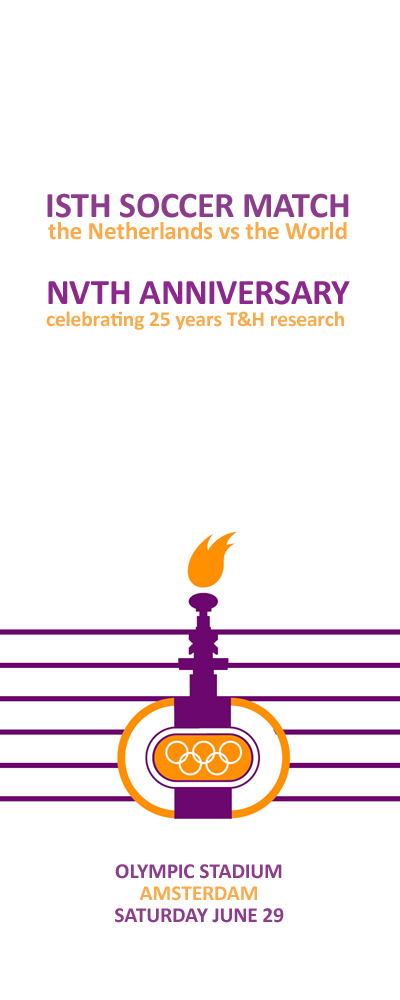
Dring the ISTH conference which will be held in Amsterdam this summer we will be organising the traditional ISTH Soccer Match (hostland vs the world) on saturday 29th of june in the Olympic Stadium Amsterdam. Before, during and after the soccer Match we will also celebrate the 25th birthday of the NVTH, the Dutch version of the ISTH. More information will follow, but for now I can present you the design of the entrance tickets. Woehoe!

NVTH fussballfest ticket front final

News from AllTrials.net

So I got an email from the folks from alltrials.net on their progress. I explained the initiative in an earlier post in which I also told that I  as well as the Dutch Epidemiological Society (VVE) signed the petition. So did it help? Just read the following section from their email.

You, and 40,000 other people around the world, have signed the AllTrials petition. We are on the threshold of significant change, but we now urgently need help from all of you to make this a reality.

Your support has already persuaded hundreds of organisations to commit to the aim of getting all clinical trials registered and their results reported. These include regulators and faculties. GSK, one of the biggest drug companies in the world, has signed up and others are considering it. Some of these groups are now starting discussions about the practical ways to stop trial results being withheld.

So far we’ve created a ripple, and got some important commitments. We have empowered individuals in large organisations to speak up, and it has changed the mainstream opposition on this issue. In doing so, we have also challenged those who try to pretend that the problem doesn’t exist, or who falsely claim that it has already been fixed.

But this is only the start if you ask the alltrials.net folks: they want to push on with three goals:

  • One million signatures on the petition. 
  • More international organisations signed up.
  • £40,000 so we can keep going.

I can only agree: consider signing (if you haven’t done so already)!

Paper published in Arthritis Care & Research now quoted in NTVG

The arthritis Care and Research paper which I co-authored (PubMed) attracted attention from the guys of the NTVG. This paper, originally a collaboration between the Reumatology department and the department of Clinical Epidemiology described the relationship between BMI as a proxy for obesity and treatment response in patients with rheumatoid arthritis as is described on the news section of the NTVG website. The text of the news item from the NTVG website can also be read on this website if you ….

Continue reading “Paper published in Arthritis Care & Research now quoted in NTVG”

LUMC workshop on scientific integrity

Together with my colleague TdC from the department of geriatrics I am working on a workshop for starting PhD students on the topic of scientific integrity under the working title “On being a scientist: a workshop in scientific integrity”

The LUMC code of scientific integrity, the recent KNAW report of cie. Schuyt and the publication of the National Academy of Science “On being a scientist” will form the backbone of the this workshop (see also the video below of the NAS, with the great quote “scientist should be people too!”). We are still developing the actual content, but this workshop will primarily based on several cases that will be discussed, ranging from cases of clear scientific misconduct to cases of conflicting demands of supervisors. How can you spot these problems in advance, solve or preferably prevent them? What additional measure should be put in place to sustain a critical but workable environment?

I am excited that I can be part of the team that develops this workshop. As I said before, I do not believe that this workshop will prevent all possible scientific misconduct, but I do believe that educating PhD students helps to prevent hem from making honest mistaken. Also, I hope that this course will help to create a critical but positive atmosphere in which science will thrive.

This workshop will be part of the PhD training that the LUMC offers free of charge. The first edition of the this workshop will be held on September 18 2013. Please contact me via email for more information.

————————–

video “on being a scientist” from the NAS

Grant awarded to investigate the role of coagulation FVIII in the aetiology of ischaemic stroke in RATIO study

I just received a letter from the KNAW stating that the grant proposal I sent to one of the fund of the KNAW, the van Leersumfunds, was awarded. From their website, we can only learn a little about this fund:

“The Van Leersum Fund supports neuro(bio)logical, radiological and pharmaceutical research by awarding a series of research grants.

The Fund was established in 1922 and is named after P. van Leersum. The assets of the fund are made up of his estate and the estate of Ms I.G. Harbers-Kramer.”

With this grant we will be able to measure coagulation favtor VIII in the ischaemic stroke substudy of the RATIO study. Coagulation factor FVIII is one of the most potent risk factors for venous thrombosis in the coagulation system, and were quite curious what effect it has on the risk of ischaemic stroke in young women.

Diane 35 and thrombosis risk – Argos broadcast part II

Last week I wrote a post after hearing the radio broadcast of Argos. They concluded that broadcast with the promise to discuss how it is possibe that a more expensive, just as effective medicine which has more side effects still can be prescribed (in large numbers) in the Netherlands.

So I’ve listen with great interest the second part of the story, which can be heard on the Argos website. They journalists did a good job by covering all sides of the story , and they provide insight in the differences between ‘advertisement’ and ‘providing information’. What if information that is provided is only one sided? Does that count as advertisement? and if you want to play a nice game during the broadcast, ‘spot the logical fallacy’ is good suggestion… Gems!

In case you are wondering: the absolute risk of thrombosis in young women is low, even when using oral contraceptives. But I still believe that all unnecessary added risk without any benefit that can be avoided should be avoided by you in dialogue with your GP!

Is science self-cleansing? An article in the “Academische Boekengids” discussing report cie. Schuyt

Earlier I wrote about the “Adviescommissie onderzoeksgegevens in de wetenschap van de KNAW” and their report “Zorgvuldig en integer omgaan met wetenschappelijke onderzoeksgegevens”. This report induced a discussion in the March 2013 edition of the Academische Boekengids .

Three scientist give their vision: Miedema (dean of Medicine at the UMCU) Vandenbroucke (KNAW professor and professor of epidemiology at the LUMC, member of committee Schuyt) and Paul (professor of secularization studies in Groningen). Important to note is that the contradiction between the authors was known beforehand.

Miedema identifies a change in science, especially medical and social science, in which economic and social forces influence science and scientists. These forces have led to a ‘system failure’ of science, leading to shoddy science or in his words ‘post academic science’. Miedema argues that these changes cannot be undone and certain measures need to be taken to correct this system failure. What measures? Miedema points toward Quality Assurance and Quality Control (QA/QC) making a comparison with so called pharmaceutical research embedded within Good Clinical Practice (GCP). This should be done by governments, universities and funding bodies. Interestingly, he leaves scientist out of this list. And what does Miedema think of the report of the committee? He believes the vision of the report is based on the old idea of science where all scientist are directly held accountable by peer pressure, a vision that according to Miedema is not valid in this day and age.

Vandenbroucke points out an error in the argumentation: Miedema targets post academic science. Vandenbroucke agrees that this is a problem, but not the problem discussed by the committee. Their task was to see how data during and after research should be treated in order to keep science workable without to many hiccups and problems. The committee provides some answers but one of the main themes is that scientist should self-regulate, for they are the only experts in this area. This is in contrast to who Miedema who abhors the idea of self-regulation: science is not science anymore, so how can scientist self-regulate with all these strong forces that are incomprehensible to grasp for a simple scientist. Vandenbroucke counteracts Miedema by explaining that his vision of science (science is the search for truth) is not at odds with the problems that arise with post academic science (science is a complex social construct in which forces other than the truth have a big influence). Even more: these two notions can coexist, a concept first noted by Stephen Jay Gould.

Paul tries to reconcile the two previous writers: he agrees with Miedema that in earlier times the scientist was appreciated for his behavior as a person, whereas this view seems to be outdated in this day and age. But Paul also approaches the problem from the other side: the solution of the problems that come with post academic science calls for strong personalities that can counter unwanted forces that trouble science. Paul mentions the work of the science historian which he – ought enough in this context- announces as an ‘honored scientist’ (Dutch: gelauwerde wetenschapper) who published his ‘handsome study’ (Dutch: fraaie studie).

So what are the suggested solutions? Because the authors disagree on the origins of the problem, their solution also differ. Especially Vandenbroucke and Miedema find themselves on first glance diametrically opposed to one other. Vandenbroucke wants to start a discussion bottom up on what it is to be a good scientist, whereas Miedema wants top down QA and QC. These ideas are not new. For example, Jacobus Lubsen also brought this concept in an article in the NRC of December of 2011. Quality control and forensic statistics should increase the detection rate of wrongdoing and should therefore be instituted. I responded to this article with a small letter to the NRC in which I state that complete control is difficult and expensive and often only identifies shoddy and fraudulent science with hindsight. Additionally it will have a preventive effect on bad science, but will it have such an effect on fraud? After all, other fields that have huge governance structures such as banking and accountancy also have their fraud scandals. Even more, the frequency of sloppy science is hardly affected by these measures. A better way to prevent both sloppy and fraudulent science is, I believe, a better training of young scientist. By introducing young scientist to the key concepts of scientific conduct, creating a critical but non-repressive atmosphere, perhaps even in several research groups to prevent tunnel vision of individuals, will lead to an increased informal control and a decrease in sloppy and shoddy science. The committee also mentions this concept and calls this “increasing peer pressure” and puts scientist at the helm of this operation.

It will not surprise you that I agree with Vandenbroucke for the most part. But I also see merit in the argumentation of Miedema. Perhaps I agree with both to some extent because they address two different concepts: science is the quest for knowledge and based on epistemic virtues. Self-regulation by education of young aspiring scientist in a positive but critical atmosphere will increase the quality of research over time. But science is also a social construct and scientist need, besides guidance by peers, governance and regulations for certain scenarios: the cases Stapel and Poldermans as well as the previously discussed book ‘Bad Pharma’ by Ben Goldacre are examples why this might be true. Besides informal peer review and guidance, an extended system of checks and balances, GCP or not, might help to keep colleagues accountable for their work. Science in itself is a system of checks and balances, but this system might be expanded with some form of regulation and standardization with efficacy and efficiency kept in mind. But most of all, now is the time train the young.

– update on 25/3/2013: an interview with both JvdB and FM was published in the NTVG. Together with the editor-in-chief they discuss performing research, obtaining a PhD and publishing your results. click here for the pdf (NTVG website, in Dutch)
 

Hora Est – thesis is topic of a Cicero article

cicero maart 2013The Cicero, the monthly magazine of the LUMC, wrote an article on my thesis. During the interview, I was able to bring fort the nuances of the work in the thesis. That is, my thesis does not fully provide all the answers in details for allr esearch questions but it does provide a simple overview: an increased clotting potential is a risk factor for ischaemic stroke but not for moycardial infarction. Unfortunately, space limitations dictated that some remarks had to be left out. Fortunately, the last remarks is about the relevance of teaching experience as a PhD: a great link to one of my propositions.

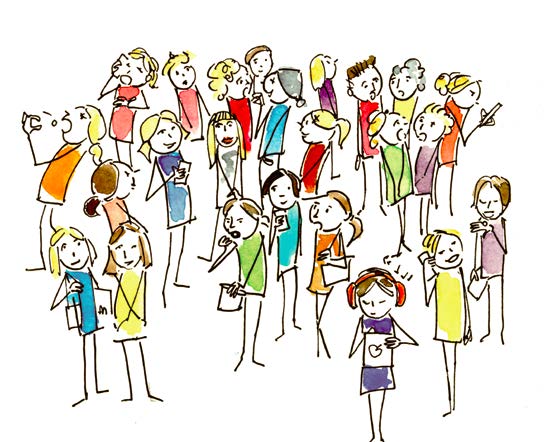
The picture above was placed in the Cicero to accompany the interview. I like it very much because it has a certain epidemiological feel to it: a group (a cohort?) of women all different, but with certain patterns.

The text of the interview can be downloaded from the media page, directly directly clicking here (pdf). The text can also be read online if you… Continue reading “Hora Est – thesis is topic of a Cicero article”

Diane 35 and thrombosis risk – Argos broadcast

The oral contraceptive pill – especially the Diane 35- was in the news again. However, this is a bit strange: there is nothing new about the information that third and fourth generation oral contraceptives have an increased risk of thrombosis compared to the risk conveyed by second generation oral contraceptives. Because the desired effects of the older and newer generation pills are similar (not getting pregnant, preventing or curing acne) there is limited, if any, reason to prescribe the newest and more expensive pills. See also the recent comment by Helmerhorst and Rosendaal in the BMJ. However, still 160.000+ (Diane 35) 500.000 (third generation) women take these newer pills. Since thrombosis risk might be highest in the first few months, it is unclear whether these women all should switch to the safer second generation oral contraceptives. But for women who get their first prescription, a second generation oral contraceptive the best way to go (also according the Dutch GP guidelines).

A lot of the research on this topic has been executed by my colleagues from both the MEGA study and the RATIO study. Want to learn more about the pill controversy, please listen this episode of Argos, a Dutch radio programme.

In case you are wondering: the absolute risk of thrombosis in young women is low, even when using a newer generation oral contraceptives. But all added risk that can be avoided should be avoided by you in dialogue with your GP!

New article accepted for publication in NTVG

A new article has been accepted in the Nederlands Tijdschrift voor Geneeskunde. The article with the title “patient crossover studies” or “case-crossover studies” is an educational in the Methodology series of the Journal. REJR is the first author of this article and she did a great job on explaining the similarities and differences between this observational study design and the experimental version of this within person comparison. These crossover trials have been discussed by TNB en JGvdB in a previous article in the same series on which i wrote earlier.

Paper published in Arthritis Care & Research

A paper which I co-authored has been indexed for PubMed. This paper is a collaboration between the Reumatology deprtment and the department of Clinical Epidemiology. LH and MvdB have done a great job by describing the relationship between BMI as a proxy for obesity and treatment response in patients with rheumatoid arthritis.

Ref: Heimans L, van den Broek M, le Cessie S, Siegerink B, Riyazi N, Han KH, Kerstens PJSM, Huizinga TWJ, Lems WF, Allaart CF. High BMI is associated with decreased treatment response to combination therapy in recent onset RA patients – a subanalysis from the BeSt study. Arthritis Care & Research. 2013

ABC promotes EBM thesis printing with my cover as example

foto

The American Book Center decided to actively promote thesis printing by their EBM. They asked me whether they could use the cover of my thesis on their promotional material because of the nice design Iris made for the cover. Since the EBM operator Joe was very helpful during the lay-out and printing process, I am willing to promote the EBM from the ABC! Curious what I am talking about? Please refer to my previous post on printing my thesis.

VVE supports AllTrials.net

The Dutch Epidemiological Society decided to support the AllTrials petition to get “all trials registered | all results public”. Why this is important? A look at their website tells us:

Thousands of clinical trials have not reported their results; some have not even been registered. Information on what was done and what was found in these trials could be lost forever to doctors and researchers, leading to bad treatment decisions, missed opportunities for good medicine, and trials being repeated.

All trials past and present should be registered, and the full methods and the results reported. We call on governments, regulators and research bodies to implement measures to achieve this.

I also signed the petition. have you? Visit www.alltrials.net and sign!

PhD defense

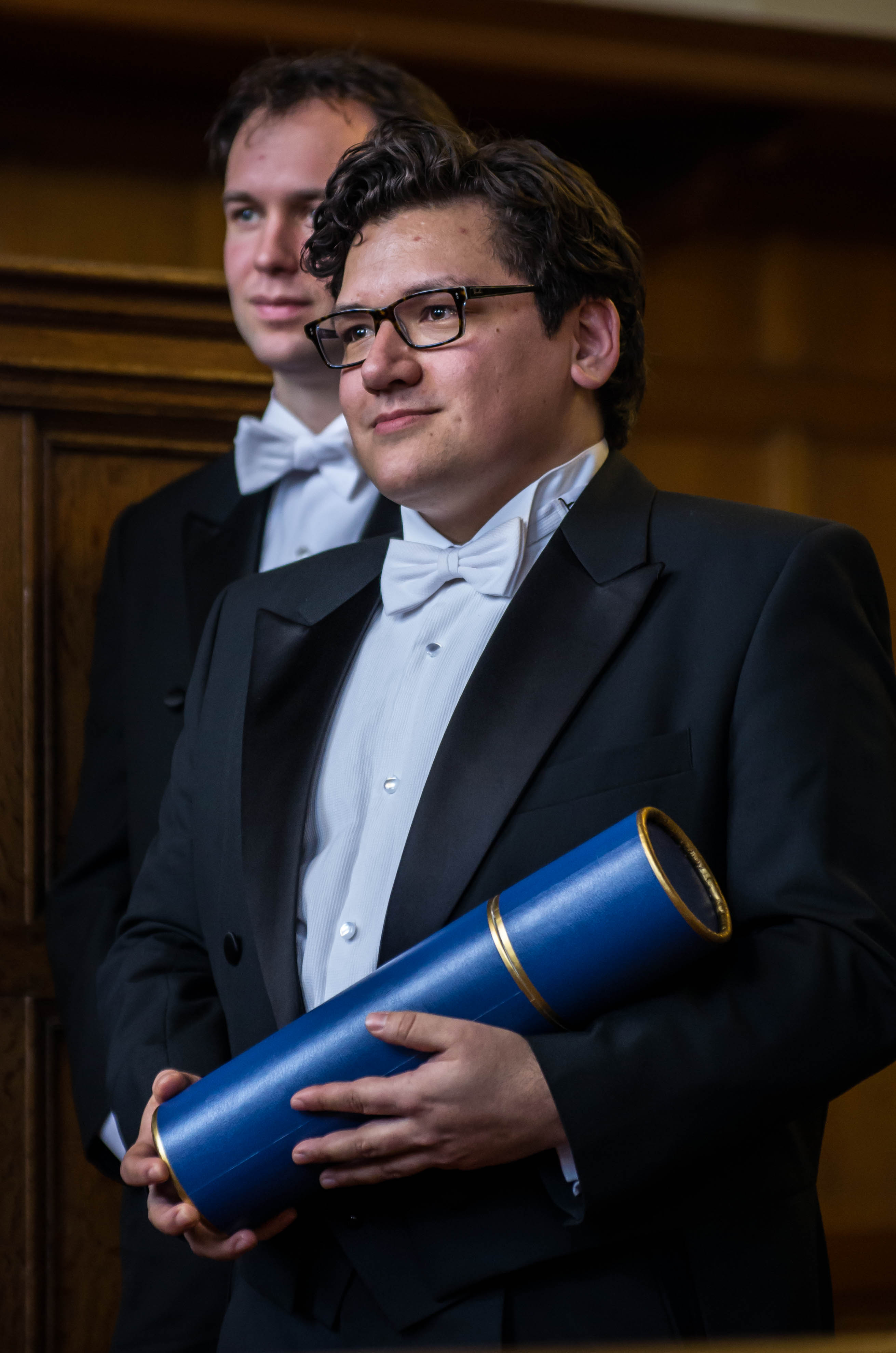
Promotie Bob Siegerink-35On february 5th I got to defend my thesis. On 13.45 the discussion started and I tried to answer all questions as clear as possible. After 45 minutes (“hora est”) the opposition committee retreated and discussed whether or not I passed the test. In the Netherlands it is never really a question on whether you make it or not: it’s more a ceremony than a true exam. So, when the acting rector magnificus told me that the committee decided to grant me my doctorate, that was not really a surprise. However, I was surprised to hear that it was decided that I passed with honors (a.k.a. cum laude). What a surprise and honor! I enjoyed the rest of the day celebrating with family, friends and colleagues. This was a great way mark the end of 4.5 years working on this thesis. Now it is time for new adventures!

Masterclass “Noordwijk” covered in the LUMC magazine Cicero

The LUMC magazine “Cicero” covered our Masterclass in Noordwijk. Its a nice description (in Dutch) of two weekend of undergrad-die-hard-epidemiology. One of the students is also interviewed and she concludes:

“Het lukt de docenten om de studenten de hele tijd
te blijven boeien, gedurende twee weekenden van donderdagavond tot zaterdagmiddag. Ik was bang dat ik dat niet zou volhouden. Maar het ging, en het bleef nog leuk ook.”

The text of the article can be found below and here in pdf (cicero 29 jan 2013).  More articles etc can be found on the media page.

Continue reading “Masterclass “Noordwijk” covered in the LUMC magazine Cicero”

The benefits of digital publishing

I chose to publish and distribute my thesis online, but rules and regulations also dictate that you have printed copies. I used the EBM to save time, money, bookshelf space and the environment, so getting the hardcopy wasn’t that difficult.

But when printed there is not much you can do about any errors. And as any doctor would tell you…. all thesis have errors in them. Some major, most minor, but still an error is an error. Using a website can help to correct minor errors after publishing. Although you have to worry whether your version is still the most up-to-date, only the use of a hard-copy variant doesn’t even give you the opportunity to decide whether you want to make a new version, and therefore having an electronic way of publishing something is desirable

So why do I tell you this all? A co-author on one of the chapters in my thesis (BML from the UK) noticed an error; I mixed up the cover pages of chapter 10 and 11. Luckily, the scientific content and the textual integrity of the thesis is not affected by this mistake. So, I just could leave the error be, but I decided to correct the error and place a new electronic version on the download page.

PhD defense: highly protocolised ceremony

the Pedel takes on a prominent role during the PhD-defense ceremony

A PhD defense in the Netherlands is a highly protocolised ceremony (plechtigheid). No clapping, only pictures at some moments, scripted words, weirds dresses, unwritten do’s and dont’s… it can be quite confusing. Want to know more?Have a look at the webpage of the universty of Leiden.


A small column in the Epistel: ‘Fraude en integriteit in de wetenschap’

The following column was written for publication in Epistel, the monthly publication of the VVE. It roughly summarises the findings of KNAW-committee Schuyt on how to handle scientific data and ensure the integrity of the data, scientist and science. It also provides a little personal view on the issue and a call for action in line with the findings of report: each epidemiologist should read the full report and discuss it with colleagues.

The text can be downloaded here (pdf), or ‘continue reading’ below.

Continue reading “A small column in the Epistel: ‘Fraude en integriteit in de wetenschap’”

978-94-91030-39-0

9789491030390_S

I decided to go the all the way: I published my thesis. So not only did I write my thesis, I also published a book. My publisher -pfoe thats sounds posh- is the The American Book Center – AnyBook Press and the ISBN is 978-94-91030-39-0.

Registration down for last two days

The registration form for those who were invited to both the ceremony and the evening programme was, according to some, not working. If you tried to register but received the message that the form was not open for new registrations, please try again.

If you question whether you are registered, please register again and email me just to be sure.

From this moment on registration should work without any problems.

Thesis now also available online

A pdf with my thesis is now also available is also available in the download section. Tommorrow I will swing by the EBM prinshop, located in the ABC store in The hague to print 30 copies for the dean, university library and ‘promotiecommissie’.


Dutch summary added

I just uploaded the the Dutch summary of my thesis which has the title

“Verhoogde stollingsneigng als oorzaak mogelijke oorzaak van hart- en herseninfarcten bij jonge vrouwen; verschillen overeenkomsten en implicaties “

At first I wanted to simplify the title and use the term arterial thrombosis. Some might argue that this really is nuance ,but I believe that a Dutch summary should not have a different message. Therefore, I kept the title this way, although it isn’t a really attractive title.

The summary can be downloaded here. This section is password protected, and if you haven’t received a password by mail or email, please contact me at b.siegerink[at]lumc.nl.

I decided to publish my Dutch summary under a creative commons  licence. CC lets you share all forms of creative works (well, especially digital work), but also makes it clear under what restrictions others can use your work. I chose the CC BY-NC-ND 3.0 license, which means that everybody is free to to copy, distribute and transmit the work, as long as they attribute the work to the author (i.e. me), do not use this work for commercial purposes, and do not alter, transform, or build upon this work. The license can be recognized through this logo:

https://i0.wp.com/i.creativecommons.org/l/by-nc-nd/3.0/88x31.png

I decided that everything I write on this website also is published under this license. This excludes all material that clearly is taken from other sources and to which I only refer.

Printing of my thesis: the EBM

Instead of the standard 300 copies of thesis that are sent to other scientist, I decided that I wanted to do things a little different: other scientist can look up the original publications, and friends and family only read the Dutch summary and the acknowledgements. Therefore, I am not printing 300 copies, but only a fraction of that number; the obligatory copies for the dean, university, committee and library (i.e. 30 copies or so).

Everybody else can either download the full version or the Dutch Summary in a couple of days time. Not only do a lot of people prefer pfds anyway, it saves time, money and trees. If you really want to have a physical book, you can order a copy with me. Click here for more information.

This is all possible because I am not publishing this book the old fashion way, But I am using the printing-on-demand espresso book machine, or EBM. This machine is a great invention: just bring two pdfs – the cover and the text-  and 8 minutes later,  PRESTO! your book. Take a look at the video below.

A great benefit is that it is also possible to print just 1 book check for errors, adapt your text and lay out, and only then order the rest of the books needed. I love the EBM. The machine can be found all around the US, and only in two places in Europe. Luckily for me, both are in the Netherlands; they are located in the American Book Center stores of which one is located in The Hague -only 143 meters away from my home-. So, last week I printed my first test copy, with some great help by EBM operator Joe. Yippie!

foto

Article published in NTVG on crossover study

Today, an educational article on crossover studies, written by TNB and JGvdB and myself is published in the NTVG. The article was published in the methodology series which explains specific topics for the general physician: it explains the basic concepts of the crossover trial, but also advocates its statistical efficiency, as can be seen in the graph above. The article is published under open access and is therefore freely accessable. There is a catch… it’s published in Dutch.

More information on my publications can be found on this website and an up to date list of publicaties can be found on my Mendeley profile.

Paper selected as most important paper

The editors of Circulation: Cardiovascular Interventions perform perform a periodic  ‘Topic Review’  which (and I quote)

summarizes the most important manuscripts, as selected by the editors that have published in the Circulation portfolio. The studies included in this article represent the most noteworthy research in the area of peripheral arterial disease. (Circ Cardiovasc Interv. 2012;5:e39-e44.)

Our research on the effect of activation of the intrinsic coagulation proteins and their effects on ischaemic stroke risk -and not on myocardial infarction risk- was selected as one of the most important manuscripts int he field of peripheral arterial disease. This study was performed in collaboration with the Maastricht University Medical Center. The summary by these editors can be read below.

Continue reading “Paper selected as most important paper”