VVE supports AllTrials.net

The Dutch Epidemiological Society decided to support the AllTrials petition to get “all trials registered | all results public”. Why this is important? A look at their website tells us:

Thousands of clinical trials have not reported their results; some have not even been registered. Information on what was done and what was found in these trials could be lost forever to doctors and researchers, leading to bad treatment decisions, missed opportunities for good medicine, and trials being repeated.

All trials past and present should be registered, and the full methods and the results reported. We call on governments, regulators and research bodies to implement measures to achieve this.

I also signed the petition. have you? Visit www.alltrials.net and sign!
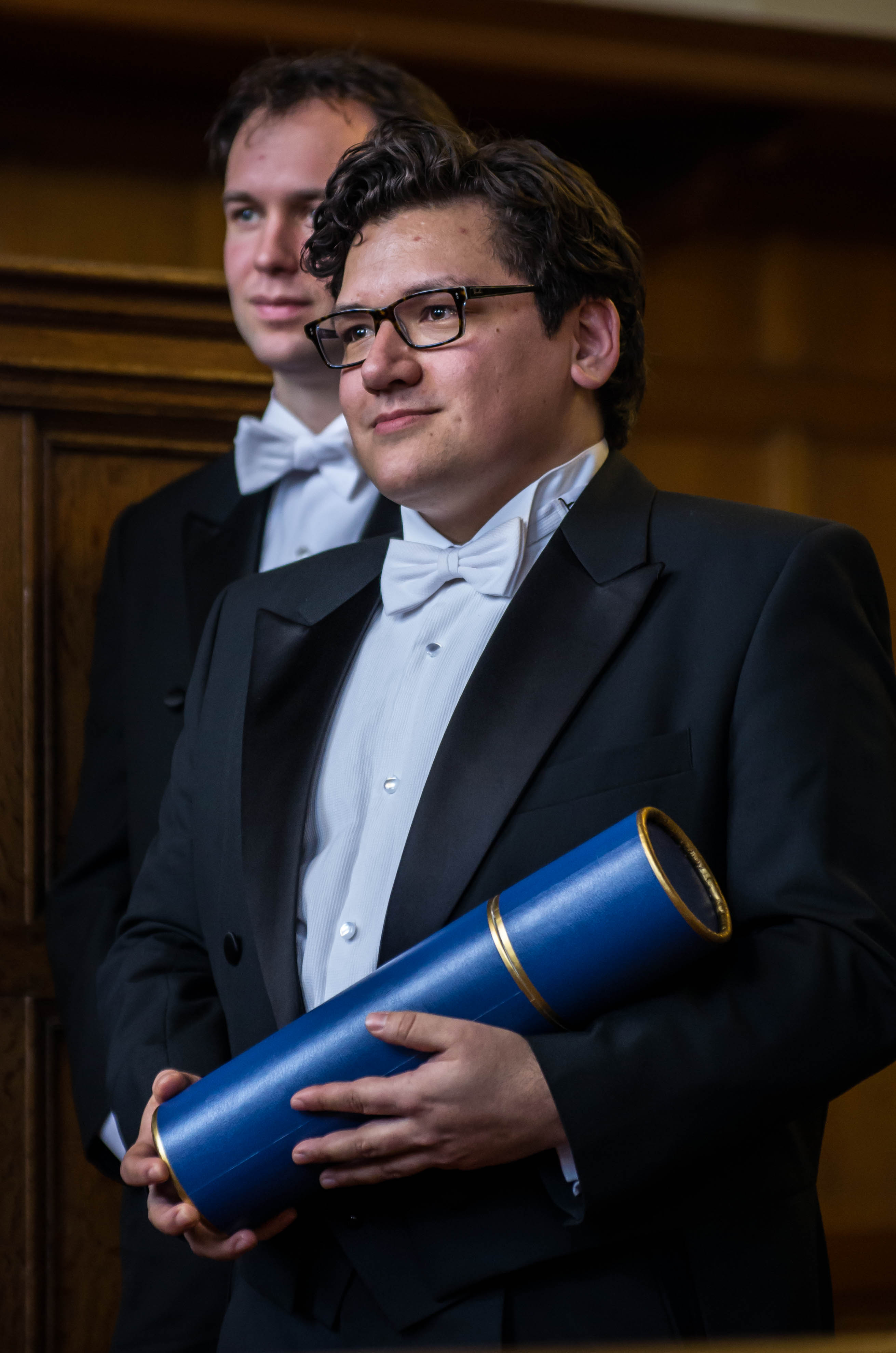
PhD defense

Promotie Bob Siegerink-35On february 5th I got to defend my thesis. On 13.45 the discussion started and I tried to answer all questions as clear as possible. After 45 minutes (“hora est”) the opposition committee retreated and discussed whether or not I passed the test. In the Netherlands it is never really a question on whether you make it or not: it’s more a ceremony than a true exam. So, when the acting rector magnificus told me that the committee decided to grant me my doctorate, that was not really a surprise. However, I was surprised to hear that it was decided that I passed with honors (a.k.a. cum laude). What a surprise and honor! I enjoyed the rest of the day celebrating with family, friends and colleagues. This was a great way mark the end of 4.5 years working on this thesis. Now it is time for new adventures!

Masterclass “Noordwijk” covered in the LUMC magazine Cicero

The LUMC magazine “Cicero” covered our Masterclass in Noordwijk. Its a nice description (in Dutch) of two weekend of undergrad-die-hard-epidemiology. One of the students is also interviewed and she concludes:

“Het lukt de docenten om de studenten de hele tijd
te blijven boeien, gedurende twee weekenden van donderdagavond tot zaterdagmiddag. Ik was bang dat ik dat niet zou volhouden. Maar het ging, en het bleef nog leuk ook.”

The text of the article can be found below and here in pdf (cicero 29 jan 2013).  More articles etc can be found on the media page.

Continue reading “Masterclass “Noordwijk” covered in the LUMC magazine Cicero”

The benefits of digital publishing

I chose to publish and distribute my thesis online, but rules and regulations also dictate that you have printed copies. I used the EBM to save time, money, bookshelf space and the environment, so getting the hardcopy wasn’t that difficult.

But when printed there is not much you can do about any errors. And as any doctor would tell you…. all thesis have errors in them. Some major, most minor, but still an error is an error. Using a website can help to correct minor errors after publishing. Although you have to worry whether your version is still the most up-to-date, only the use of a hard-copy variant doesn’t even give you the opportunity to decide whether you want to make a new version, and therefore having an electronic way of publishing something is desirable

So why do I tell you this all? A co-author on one of the chapters in my thesis (BML from the UK) noticed an error; I mixed up the cover pages of chapter 10 and 11. Luckily, the scientific content and the textual integrity of the thesis is not affected by this mistake. So, I just could leave the error be, but I decided to correct the error and place a new electronic version on the download page.

PhD defense: highly protocolised ceremony

the Pedel takes on a prominent role during the PhD-defense ceremony

A PhD defense in the Netherlands is a highly protocolised ceremony (plechtigheid). No clapping, only pictures at some moments, scripted words, weirds dresses, unwritten do’s and dont’s… it can be quite confusing. Want to know more?Have a look at the webpage of the universty of Leiden.


A small column in the Epistel: ‘Fraude en integriteit in de wetenschap’

The following column was written for publication in Epistel, the monthly publication of the VVE. It roughly summarises the findings of KNAW-committee Schuyt on how to handle scientific data and ensure the integrity of the data, scientist and science. It also provides a little personal view on the issue and a call for action in line with the findings of report: each epidemiologist should read the full report and discuss it with colleagues.

The text can be downloaded here (pdf), or ‘continue reading’ below.

Continue reading “A small column in the Epistel: ‘Fraude en integriteit in de wetenschap’”

978-94-91030-39-0

9789491030390_S

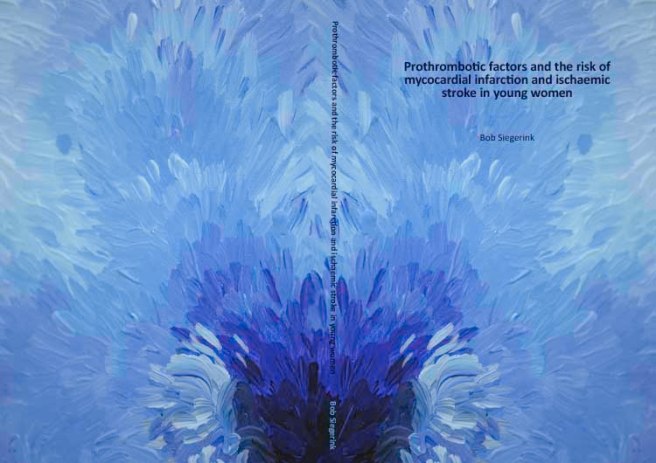
I decided to go the all the way: I published my thesis. So not only did I write my thesis, I also published a book. My publisher -pfoe thats sounds posh- is the The American Book Center – AnyBook Press and the ISBN is 978-94-91030-39-0.

Registration down for last two days

The registration form for those who were invited to both the ceremony and the evening programme was, according to some, not working. If you tried to register but received the message that the form was not open for new registrations, please try again.

If you question whether you are registered, please register again and email me just to be sure.

From this moment on registration should work without any problems.

Thesis now also available online

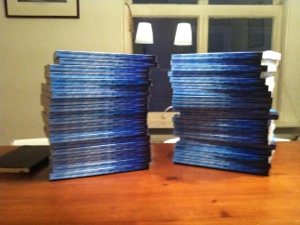
A pdf with my thesis is now also available is also available in the download section. Tommorrow I will swing by the EBM prinshop, located in the ABC store in The hague to print 30 copies for the dean, university library and ‘promotiecommissie’.


Dutch summary added

I just uploaded the the Dutch summary of my thesis which has the title

“Verhoogde stollingsneigng als oorzaak mogelijke oorzaak van hart- en herseninfarcten bij jonge vrouwen; verschillen overeenkomsten en implicaties “

At first I wanted to simplify the title and use the term arterial thrombosis. Some might argue that this really is nuance ,but I believe that a Dutch summary should not have a different message. Therefore, I kept the title this way, although it isn’t a really attractive title.

The summary can be downloaded here. This section is password protected, and if you haven’t received a password by mail or email, please contact me at b.siegerink[at]lumc.nl.

I decided to publish my Dutch summary under a creative commons  licence. CC lets you share all forms of creative works (well, especially digital work), but also makes it clear under what restrictions others can use your work. I chose the CC BY-NC-ND 3.0 license, which means that everybody is free to to copy, distribute and transmit the work, as long as they attribute the work to the author (i.e. me), do not use this work for commercial purposes, and do not alter, transform, or build upon this work. The license can be recognized through this logo:

https://i0.wp.com/i.creativecommons.org/l/by-nc-nd/3.0/88x31.png

I decided that everything I write on this website also is published under this license. This excludes all material that clearly is taken from other sources and to which I only refer.

Printing of my thesis: the EBM

Instead of the standard 300 copies of thesis that are sent to other scientist, I decided that I wanted to do things a little different: other scientist can look up the original publications, and friends and family only read the Dutch summary and the acknowledgements. Therefore, I am not printing 300 copies, but only a fraction of that number; the obligatory copies for the dean, university, committee and library (i.e. 30 copies or so).

Everybody else can either download the full version or the Dutch Summary in a couple of days time. Not only do a lot of people prefer pfds anyway, it saves time, money and trees. If you really want to have a physical book, you can order a copy with me. Click here for more information.

This is all possible because I am not publishing this book the old fashion way, But I am using the printing-on-demand espresso book machine, or EBM. This machine is a great invention: just bring two pdfs – the cover and the text-  and 8 minutes later,  PRESTO! your book. Take a look at the video below.

A great benefit is that it is also possible to print just 1 book check for errors, adapt your text and lay out, and only then order the rest of the books needed. I love the EBM. The machine can be found all around the US, and only in two places in Europe. Luckily for me, both are in the Netherlands; they are located in the American Book Center stores of which one is located in The Hague -only 143 meters away from my home-. So, last week I printed my first test copy, with some great help by EBM operator Joe. Yippie!

foto

Article published in NTVG on crossover study

Today, an educational article on crossover studies, written by TNB and JGvdB and myself is published in the NTVG. The article was published in the methodology series which explains specific topics for the general physician: it explains the basic concepts of the crossover trial, but also advocates its statistical efficiency, as can be seen in the graph above. The article is published under open access and is therefore freely accessable. There is a catch… it’s published in Dutch.

More information on my publications can be found on this website and an up to date list of publicaties can be found on my Mendeley profile.

Paper selected as most important paper

The editors of Circulation: Cardiovascular Interventions perform perform a periodic  ‘Topic Review’  which (and I quote)

summarizes the most important manuscripts, as selected by the editors that have published in the Circulation portfolio. The studies included in this article represent the most noteworthy research in the area of peripheral arterial disease. (Circ Cardiovasc Interv. 2012;5:e39-e44.)

Our research on the effect of activation of the intrinsic coagulation proteins and their effects on ischaemic stroke risk -and not on myocardial infarction risk- was selected as one of the most important manuscripts int he field of peripheral arterial disease. This study was performed in collaboration with the Maastricht University Medical Center. The summary by these editors can be read below.

Continue reading “Paper selected as most important paper”

Masterclass clinical research and epidemiology in the University digital newsletter

Today a story on our Masterclass clinical research and epidemiology (aka Noordwijk) featured in the University Newsletter.

An excerpt (in Dutch):

“Voor de vijfde keer konden studenten Geneeskunde en Biomedische Wetenschappen deelnemen aan het vlaggenschip van het epidemiologische honoursprogramma: de masterclass Klinisch onderzoek en epidemiologie. De belangstelling epidemiologisch honoursprogramma is groot maar ook bij andere afdelingen, zoals Anatomie en Farmacologie, is het ook mogelijk om een honourstrajecten te volgen.”

It’s a great thing that our efforts get so much media attention: perhaps it’ll help us in securing the funding for the next years? Click here for the complete story, or read more story in the media section.

Date of defense

A date has been set: February 5th 2013, 13:45! All that remains is printing the book itself, inviting everybody, and find a nice place to have festive dinner afterwards.


ISTH 2013 Amsterdam

The ISTH 2013 will be held in Amsterdam. This is a nice opportunity for Dutch researchers to really show how a nice conference should be: work hard during intensive debates on good research during the day and relax, drink and meetup with old friends in the evening.

Today I got an email asking me to help in abstract reviewing committee. This is not the first time to get such a request, but being a member of the ISTH and having most of my research n the topic of thrombosis, I feel this is truly an honor.

As a sidenote, I made a remark in an earlier post on the open system of reviewing: should every reviewer relinquish their anonymity?  This is not the case in this abstract selection committee, but there is at least a measure to prevent old boys network bias: all abstract are reviewed and scored in a blinded fashion. This does not prevent that persons can be identified by knowing their previous and ongoing work, but at least it helps to prevent -unconscious- preferential reviewing and scoring.

MTV study also in Mare

https://i0.wp.com/mareonline.nl/pivotx/templates/mare/img/logo.png

Another article on the first results from the MTV study, this time an interview in the university newspaper Mare. The senior author, prof Schipper, is interviewed and the necessary nuance is conveyed in a great way. The reporter suggest that helmet should be mandatory based on these results, but Schipper responds with that “with this amount of morbidity and mortality it is advisable to wear a helmet”, so also speaking from here experience as trauma surgeon. The combination of science and clinical experience is critical in this interview: the reporter links the idea of a single victim of a  MTV crash to its injuries, which we have done for approx 33500 patients. The reporter Bart Braun continues along this line and describes our somewhat unexpected finding: the morbidity and mortality among light moped crash victims is highest, especially when one considers the head injuries. The notion that the results are only applicable to those who are admitted to the hospital is also neatly conveyed. In short – a job well done! The complete article can be found in the media section of this website.

Radio interview – Masterclass ‘Noordwijk’

The first weekend of the Masterclass in Noordwijk just finished. It was a great 3 days with a lot of interesting discussions. I hope the students liked it as well.

Today, I was interviewed on the subject of ‘a Masterclass in a youth hostel’. Apparently, the local radio station thought it was quite strange that students of the LUMC would go to Noordwijkerhout to get trained in clinical epidemiology. With 60-80 student applying each years of which only 32 can be selected, we know better! The interview started of a little slow (a lot of Ehms on my part didn’t help) but eventually I think the interview was quite okay. More information can be found on the website of nens.nl. I also uploaded the interview to the media section of the this website.

Coffee and DVT: article in JTH and Mare now also in English

Earlier, I wrote about the interview published by the University newspaper Mare on our research of the protective effect of coffee on DVT risk. Being a Dutch University, the newspaper is in Dutch too. Luckily for us, the story was picked for the english page of the Mare. This page regurgitates some content of the previous week, except for that it is translated/rewritten in English. The english text can be found here, and I’ve put a pdf of the text in the Media section.

ERA-EDTA Istanbul

The 50th edition of the ERA EDTA congress will he be held in Istanbul from the 18th until the 21st in may. Since I mainly work i the field of thrombosis, I have never been to this congress, but I probably will visit it next year: The epidemiological team from the AMC is invite to organise an educational session on clinical epidemiology and they asked me to join their team. The content of this methodological session will resemble the smaller meeting we had last year in Thessaloniki, Greece.

Also, I will also be scoring some abstracts for this meeting: I got an email telling me, or warning me perhaps, to expect up to 80 abstract for me to score. In just a couple of days. Let’s hope that they have clear guidelines to help, otherwise it will be tough nut to crack. Nonetheless, both activities give me some insight in the field of nephrology and will help me to further train my epidemiological teaching skills.

Opzet en interpretatie van mensgebonden onderzoek – slides online

Tomorrow I will teach at the graduate course ‘Design and analysis of clinical research’. My part is to introduce the concept of confounding which i demonstrate through the general  idea of ‘confusing of effects’.  Perhaps a bit ‘oldskool’, but it works as a nice introduction to the concept without a direct confrontation with DAGs etc, especially since it helps to think in ways to prevent / solve this problem in data analyses. What ‘arrow’ in the classic confounding triangle can be removed?

I also go into the concept of ceteris paribus, which is further explored through examples of IV analyses. These examples can be historical (Boylston and inoculation) or recent (mendelian randomisation on CRP and CVD disease).

Slides are present in the presentations section of this website.

2013 advisory committee of JTH

https://encrypted-tbn2.gstatic.com/images?q=tbn:ANd9GcQYbRUW6lG_9qk_3f_81zlBXZ9qL_w3g1T_HDUnfaP81FoEKjxOI just got an email asking whether I would like to join the advisory committee of the JTH for the year of 2013. What a surprise! The text in the email reads:

[…]Our Advisory Board is composed of our most active reviewers and we expect members to review for us from time to time when papers fall within their expertise.[…]

I am truly honored with this invitation, and although I do not yet fully understand the difference between a regular reviewer and a member of the advisory board, I am really enthusiastic to help the journal to reach for and maintain the high academic standard of their articles. Recently, I’ve been wondering about the peer review system: should we change it in order to help prevent publication bias / scientific misconduct? Should we open up the system and urge reviewers to relinquish their anonymity like they ask at the PLoS journals?

Blog

Quick updates and items not suitable for the static pages are posted in the blog section. Please check back regularly or subscribe to this blog via email.